


Halloween with a Finnish Lapphund: candy, costumes, doorbells and Kekri
The doorbell is the whole problem. A Finnish Lapphund spends eleven months of the year learning t...

Before Timber came home, I did the homework most people do. Hours of reading, a folder of saved tabs, and a nagging worry that I was about to pick the wrong breed for my life. The Finnish Lapphund kept rising to the top of the list. Years later, with Timber and his nephew Tundra asleep by the door here in Castlegar, I am still glad I chose this smiling, floofy, reindeer-herding spitz. This is the plain overview I wish someone had handed me, with links out to the deeper guides when you want more.

The Finnish Lapphund is a smaller than medium spitz breed from Finland. The Sami people of Lapland kept dogs of this type to herd reindeer and watch over the camp. A Lappy is strongly built for its size and carries a long, dense double coat. The rest is pure spitz: a fox-like face, small pricked ears, and a bushy tail that curls up over the back (FCI Standard No. 189 and AKC).
The breed answers to several names. The native Finnish name is Suomenlapinkoira. The FCI uses "Finnish Lapponian Dog" as its official English name. Owners everywhere just say "Lappy", and the plural is "Lappies". If you have been quietly avoiding the word out loud, it is said "LAP-hund", and I unpack the Finnish words owners use in the Finnish Lapphund pronunciation and meaning guide.
Kennel clubs file the breed in three different places, which confuses people who compare registries. The AKC puts it in the Herding Group and granted full recognition in 2011. The UK Kennel Club uses the Pastoral Group. The FCI lists it in Group 5, the spitz and primitive types, under Standard No. 189. The Canadian Kennel Club also treats it as a herding breed.
The breed comes from Lapland, the Arctic homeland of the Sami people. Lapland spans the north of Finland, Sweden and Norway, and reaches into north-west Russia. For centuries the Sami used dogs of this type to move reindeer and guard the camp (AKC, Finnish Lapphund History and FCI Standard No. 189).
The Finnish Kennel Club accepted the first breed standard in 1945, after distemper and the Second World War pushed numbers dangerously low. Around 1967 the original breed was split by coat length. The long-coated dog became the Finnish Lapphund, and the shorter-coated worker became the Lapponian Herder. The current native name, Suomenlapinkoira, was adopted in 1993 (Finnish Lapphund Club of America).
That working past is worth knowing. It explains the barking, the chasing, and the "let me organise everyone" energy you will meet in your own kitchen. The full story, from the Sami fells to the modern show ring, sits in my Finnish Lapphund history guide.
Finnish Lapphunds are medium dogs on the smaller side. Standards measure height at the withers, which is the top of the shoulders. The FCI gives an ideal of about 49 cm (19.5 in) for males and 44 cm (17.5 in) for females, with a tolerance of 3 cm either way. The AKC describes much the same dog, listing 18 to 21 inches for males and 16 to 19 inches for females (AKC standard and The Kennel Club, UK).
No standard lists an official weight, because the FCI says type matters more than size. As an informal reference, adults commonly land between 15 and 24 kg (33 to 53 lb) (PetMD, vet-reviewed). The coat adds a size the dog does not actually have. Tundra weighs a good ten pounds less than visitors guess, because they are squeezing a cloud.
Males run a few centimetres taller and several pounds heavier, and they grow a much fuller mane around the neck and shoulders. Timber has the lion ruff and knows it. Tundra is sleeker. The gap is small enough that temperament should still decide which puppy comes home with you. The growth chart by month is in my size, weight and growth guide.
| Trait | Finnish Lapphund |
|---|---|
| Height (ideal) | Males about 49 cm (19.5 in); females about 44 cm (17.5 in) |
| Height (AKC range) | Males 18 to 21 in; females 16 to 19 in |
| Weight (informal) | About 15 to 24 kg (33 to 53 lb); no official standard weight |
| Coat | Long, harsh outer coat over a dense undercoat; sheds year round |
| Colours | All colours, one main colour dominant |
| Temperament | Friendly, calm, clever, vocal, gentle with people |
| Exercise | Moderate daily walks plus mental work |
| Lifespan | About 12 to 15 years |
| Group | AKC Herding; UK Pastoral; FCI Group 5 (Spitz) |
Friendly, calm, clever and faithful. Every major standard reaches for words like intelligent, brave, calm and docile, and every one of them lists aggression and extreme shyness as serious faults. The AKC calls Lappies "friendly and eager to learn" and "particularly submissive towards people" (AKC standard). They are excellent with children and usually fine with cats and other dogs when raised together, though two unrelated males can rub each other the wrong way (AKC, Finnish Lapphund facts).
Three things surprise new owners. The first is the volume. Lappies were bred to move reindeer with their voices rather than their teeth, so they alert readily and hold strong opinions about the delivery driver. The second is the sensitivity. This is a thinking breed that reads your mood and shuts down under harsh handling, so reward-based training is the method that actually works (Southern Finnish Lapphund Society and AVSAB position statement on humane dog training).
The third surprise is the clock. A Lappy carries puppy behaviour well into its second year, which catches people off guard around month fourteen. They are also a poor match for a house that stands empty all day, because these are sociable dogs that want to be where the people are. The full personality picture is in my temperament guide, and the step by step method is in the training guide.

Almost every colour a dog can be. The Finnish Lapphund has one of the widest colour ranges in the dog world. Seven coat words cover most of what you will meet: black and tan, wolf sable, cream, brown, sable, domino and black. The rule shared by every standard is that one main colour dominates the body, with markings allowed on the head, neck, chest, underside, legs and tail (AKC standard and FCI Standard No. 189).
Black with tan markings is the common look, and breeders often call it tricolour once white spotting joins in. The one real disagreement between standards is merle. The UK Kennel Club lists merle as unacceptable, while the AKC and FCI standards do not name it at all (The Kennel Club, UK). Coat colour has no bearing on health. Timber and Tundra do not even match each other.
Seeing six of the seven coats lined up side by side helps more than any description, which is why we drew the coat colours collage tee. The colour by colour breakdown, including how banded hairs work, is in my Finnish Lapphund colours guide.
Yes they shed, and no they are not hypoallergenic. The coat is a long, harsh, weatherproof outer layer sitting over a soft, dense undercoat. It sheds moderately all year. Once or twice a year, usually in spring and often again in autumn, the undercoat blows out in handfuls (PetMD, vet-reviewed and Purina UK).
A coat blow is worth picturing before you commit. The loosened undercoat often stays trapped in the longer guard hairs instead of dropping cleanly to the floor. Skip the brushing for a week and it works its way out on its own, all over the couch. Around here the vacuum becomes a household member by April, which is exactly why we drew the coat blowout survivor tee.
Allergy sufferers deserve a straight answer. A heavy shedding double-coated breed is one of the harder picks in the dog world, and no amount of grooming changes what your immune system does. The reasons, and the management routine that helps, are in my are Finnish Lapphunds hypoallergenic guide.
Less than the floof suggests, for most of the year. Plan on brushing a couple of times a week, and daily during the seasonal blow when loose undercoat catches in the guard hairs (FLCA, Lapphund Grooming). Bathing is roughly monthly or as needed. The coat is low-odour and largely self-cleaning, and over-bathing strips the oils that keep it that way.
One rule matters more than all the tools. Never shave a Lappy. The double coat insulates against heat as well as cold, and shaving can wreck the way it grows back, so trimming stays limited to tidying the feet (FLCA, Lapphund Grooming). An undercoat rake and a decent slicker do almost all the real work. Full routines live in my Finnish Lapphund care guide.

Moderate exercise, with mental work alongside it. The Finnish Lapphund Club of America describes the breed's exercise needs as moderate, and that matches life with mine (FLCA, Living with a Lapphund). A daily walk or two plus some thinking work keeps a Lappy content. The reward is a real off switch at home.
This is a clever herding breed, so a job beats a longer walk. Lappies do well at agility, rally, obedience, herding trials, nosework, tracking and therapy work (AKC, Finnish Lapphund facts). Ten minutes of scent games in the yard settles Tundra better than an extra kilometre of pavement. A bored Lappy gets louder, so enrichment is part of the deal. Routines by life stage are in my exercise needs guide.
This is a hardy breed that typically lives 12 to 15 years (PetMD, vet-reviewed and Finnish Lapphund Health UK). Like every breed, it carries some hereditary conditions worth screening for. That is the whole reason a health-testing breeder is worth waiting for.
The parent clubs ask for a hip evaluation, an elbow evaluation in North America, and an annual eye exam by a board-certified veterinary ophthalmologist. They also ask for DNA tests for prcd-PRA and Pompe disease, and for degenerative myelopathy where the club lists it (AKC health testing requirements and PLOS One, Pompe disease in Lapphunds). A CHIC number means the results were published through OFA, which is transparency rather than a health guarantee (FLCA, What is CHIC). A DNA test never replaces the eye exam.
This is general information, not veterinary advice. For your own dog, talk to your veterinarian. The condition by condition detail is in my health problems guide.
A Lappy suits you if you want a friendly family companion, you can live with some barking and a lot of hair, and you can give it daily exercise plus company. The Arctic origin makes them wonderful in cold, snowy places, and it makes summer heat something you plan around (FLCA, Living with a Lapphund).
The breed is a harder fit in three situations. Long working days in an empty house are the first, because these dogs are sociable and get noisy or destructive when isolated. A low-shedding household is the second. A yard without secure fencing is the third, since the herding instinct sends a Lappy after squirrels and rabbits without checking in first. The FLCA also notes the breed is generally unsuited to apartment life, with older and calmer dogs as the exception. My honest pros and cons run through the is a Finnish Lapphund right for you guide.

From a health-testing, club-affiliated breeder, expect roughly 1,500 to 3,000 USD, which is about 2,000 to 4,000 CAD. Show or breeding prospects and imported dogs run higher, commonly 3,000 to 5,000 USD or more. A rescue or rehome adoption fee usually sits around 50 to 300 USD. A "Finnish Lapphund" advertised for a few hundred dollars is almost never what the listing claims.
Rarity explains the wait more than the price does. The breed ranked 129th of 201 in the AKC's 2024 registration statistics, only a few dozen active breeders work across the United States and Canada, and litters of four to six puppies are typical. Waiting lists of six months to two years are normal. Mine for Tundra ran about fourteen months.
Start with the national breed clubs rather than a marketplace ad. The Finnish Lapphund Club of America, the Finnish Lapphund Club of Canada and the Finnish Lapphund Club of Great Britain all keep referral information, and club secretaries know who has a litter planned. Ask to see health results for both parents and verify them yourself. My full walkthrough is in how to find a Finnish Lapphund breeder, and the lifetime cost picture is in the Finnish Lapphund price guide.
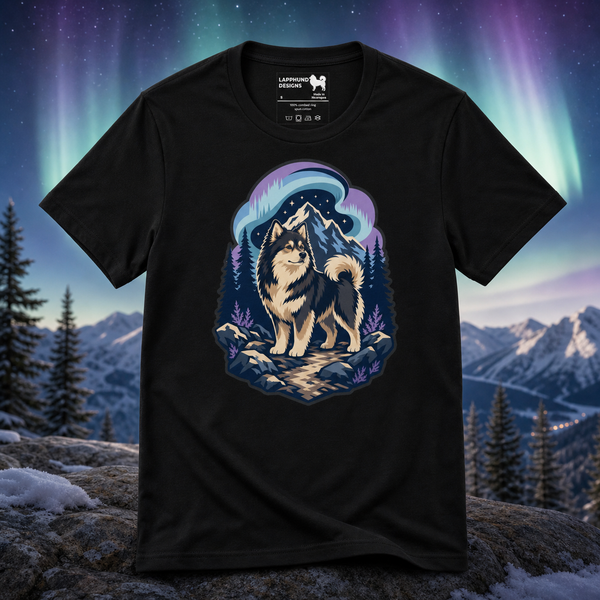
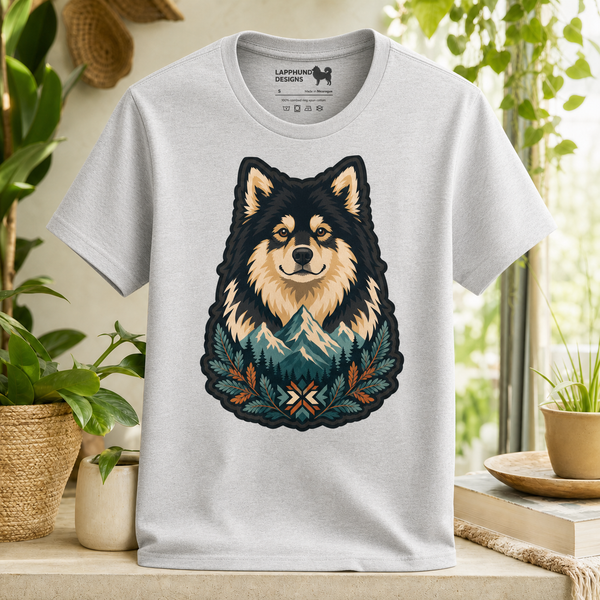
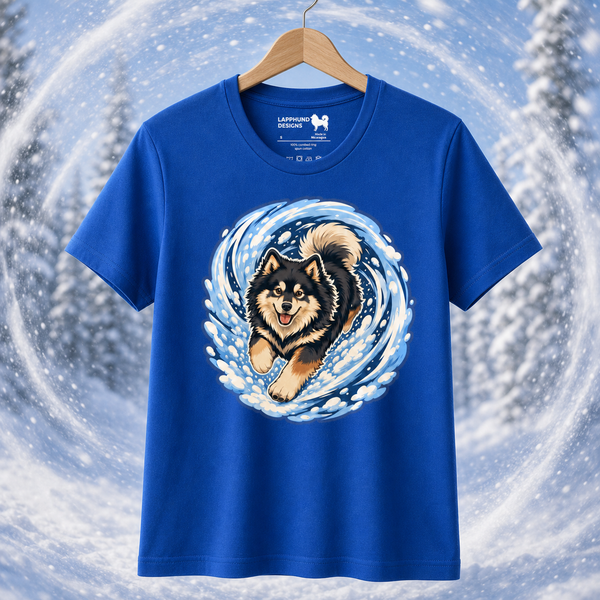
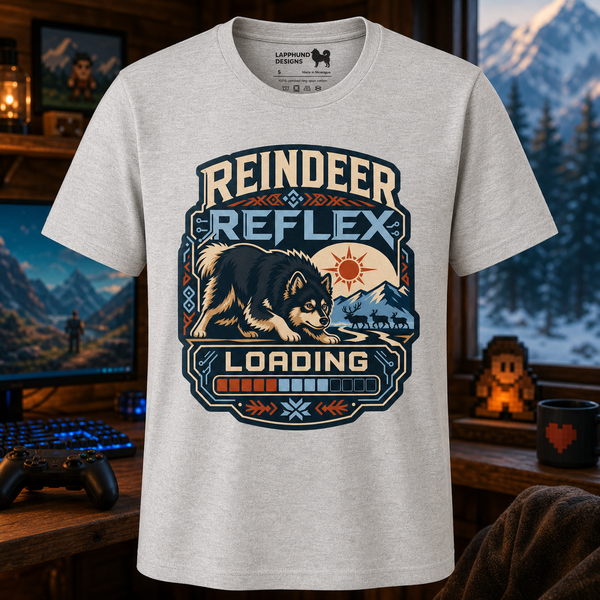
However your Lappy journey is going, whether you are still reading in the research phase or already have a floof asleep on your feet, I am glad you are here. We started Lapphund Designs because we could not find anything that looked like our dogs, so we draw breed-true designs across Finnish Lapphund t-shirts, mugs, stickers, coasters and dog bowls. Welcome to the Lappy Pack.
Yes. They are friendly, calm and notably good with children, and they are generally sociable with other dogs and pets when raised together. They are watchdogs that alert, and the standards are explicit that they are neither guard dogs nor protection dogs.
They can. The breed was developed to move reindeer by barking, so Lappies are naturally vocal and quick to alert. With early, consistent training you can teach a "quiet" cue and keep the volume manageable. A bored Lappy is always a louder Lappy.
No. They have a thick double coat that sheds moderately year round, with a heavy seasonal coat blow once or twice a year. They are a poor match for anyone who needs a low-allergen dog.
Typically about 12 to 15 years. Lifespan is helped by choosing a health-testing breeder, keeping your dog lean, and staying current with veterinary care.
Roughly 1,500 to 3,000 USD, or about 2,000 to 4,000 CAD, from a health-testing, club-affiliated breeder. Show or breeding prospects and imports run 3,000 to 5,000 USD and up, and rescue fees are usually 50 to 300 USD. Expect a wait of six months to two years.
Yes, with the right approach. They are intelligent and eager to please, and they are sensitive, so gentle, consistent, reward-based training works best. Harsh or heavy-handed methods tend to backfire with this breed.
My complete owner-written library on the Finnish Lapphund, in one place:

Written by Jill, co-founder of Lapphund Designs. Jill lives in Castlegar, BC with her husband and their two Finnish Lapphunds, Timber and Tundra. She started Lapphund Designs after struggling to find products that celebrated the breed she loves.
Every design in the shop starts from the real Finnish Lapphund. See every design Pick your Lappy's coat
A Finnish Lapphund pre-walk routine involves spinning, barking, and a level of excitement that defies physics.
The doorbell is the whole problem. A Finnish Lapphund spends eleven months of the year learning t...

I have heard our breed called a Lap-a-hound, a Finnish Lap Hound and, once, a Finnish Lampshade. ...

A few times a month somebody sends me a photo of a fluffy dog and asks whether it is part Finnish...
Comments (29)
petinsurancebuddy • February 18, 2025
**
Are Finnish Lapphunds secretly plotting world domination, and if so, what can we do to ensure they remain our loyal companions rather than our overlords? This question delves into the hypothetical intelligence and potential scheming of these dogs, sparking a lively debate on their loyalty and the extent of their problem-solving abilities.
petinsurancebuddy • February 18, 2025
You’re the best!
petinsurancebuddy • February 18, 2025
Outstanding effort!
petinsurancebuddy • February 18, 2025
Well done!
petinsurancebuddy • February 18, 2025
Great effort!
petinsurancebuddy • February 18, 2025
Wonderful job!
petinsurancebuddy • February 18, 2025
petinsurancebuddy • February 18, 2025
Wonderful work!
petinsurancebuddy • February 18, 2025
petinsurancebuddy • February 18, 2025
**
“Have you ever considered the ethical implications of keeping Finnish Lapphunds as pets, given their historical role as reindeer herders? How do we balance their natural instincts with our expectations as pet owners?
Leave a comment