


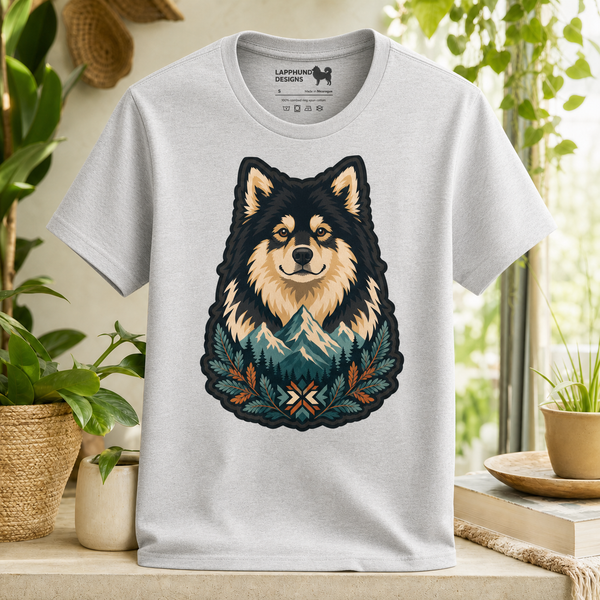



Halloween with a Finnish Lapphund: candy, costumes, doorbells and Kekri
The doorbell is the whole problem. A Finnish Lapphund spends eleven months of the year learning t...

The first spring Timber blew his coat, I thought something was wrong with him. Grey tufts drifted across the deck, and every brush stroke came back loaded. That is a healthy Finnish Lapphund doing what an Arctic herding dog is built to do. Caring for a Lappy is steadier work than that coat makes it look, once you know the rhythm.

This guide is the whole care picture in one place: the routine, the calendar, and the health screening that sits behind a long life. Where a section deserves a full manual of its own, I link the guide that carries it. This is general information and not veterinary advice, so your vet makes the calls for your individual dog.
Care for this breed sorts into five habits: coat care, daily exercise, good food, routine upkeep of nails, ears and teeth, and a yearly vet check. Nothing on that list is exotic. The Finnish Lapphund is a hardy breed and the coat is more forgiving than it looks.
The part new owners underestimate is company. The Finnish Lapphund Club of America describes the breed as a pack animal whose family is its pack. The same club warns that a Lappy left outside with little human contact turns into a nuisance barker (FLCA, Living with a Lapphund). A Lappy in the room with you is a calm dog. A Lappy alone in a yard is a project.
Daily: A walk plus something to think about, meals measured, fresh water, a quick look over the coat. Weekly: Two brushing sessions, an ear check, teeth. Monthly: A bath and a nail trim. Yearly: A vet exam, with more visits for puppies and seniors.
Brush a couple of times a week and bathe about once a month. That is the honest baseline. The Finnish Lapphund Club of America recommends weekly brushing as the floor and notes that keeping up every one to two weeks stops dead hair building into mats (FLCA, Living with a Lapphund; FLCA, Lapphund Grooming). Vet reviewed PetMD lists weekly brushing with extra attention during the heavy shedding seasons (PetMD, Finnish Lapphund).
Two sessions a week is what works here. Ten or fifteen minutes each, with a slicker brush and a steel comb, and the coat never gets away from me. The technique that makes those minutes count is line brushing, where you lift a section of coat and comb down to the skin instead of skimming the surface. I walk through the full method, the tool list and bath day in the Finnish Lapphund grooming guide.

One rule has no exceptions. Never shave the double coat. The American Kennel Club warns that the undercoat can outpace the topcoat as it regrows, leaving an uneven coat that no longer works. A shaved dog is also more vulnerable to overheating, sunburn and skin damage (AKC, Double-Coated Dog Breeds). The only trimming a Lappy needs is the hair around the feet, cut flush with the pads into a tidy domed oval (FLCA, Lapphund Grooming). Owners who have made peace with the fur tend to wear the joke, and our Fluff Around And Find Out tee gets ordered a lot in April.
The coat sets the calendar. Lappies shed some hair all year and then drop the undercoat heavily once or twice a year, usually spring and autumn. The AKC notes that shedding is triggered by changes in daylight and temperature, and that a seasonal shed runs from a few weeks to a couple of months (AKC, Managing Dog Shedding). Here is the year as I actually live it with Timber and Tundra.
| Season | What is happening | What I do |
|---|---|---|
| Spring | Blowing the winter undercoat | Daily brushing, undercoat rake, a bath and full blow dry to clear it faster |
| Summer | Lighter routine shedding, heat is the risk | Twice weekly brushing, walks at dawn and dusk, shade and water |
| Autumn | Blowing again, winter coat growing in | Daily brushing, undercoat rake, check for mats behind the ears |
| Winter | Full coat, routine shedding, best season for this breed | Twice weekly brushing, snow cleared from feet and feathering after walks |
If the fur volume is what worries you, the numbers and the house management live in do Finnish Lapphunds shed a lot. The short version is that a brushed Lappy sheds into your brush instead of your sofa.
Trim nails every three to four weeks, check ears weekly, and brush teeth as often as you can manage. None of this is breed specific. It is steady upkeep that keeps your dog comfortable.
Nails. If you can hear nails clicking on the floor, they are too long. The Finnish Lapphund Club of America prefers a cordless grinder and holds it to a three second rule, because friction is what builds heat (FLCA, Lapphund Grooming). Keep styptic powder in the kit for a nicked quick.
Ears. Look inside weekly and keep them clean and dry. Wipe only the part you can see, with a cotton ball and a cleanser your vet recommends, and never push anything into the canal (VCA Animal Hospitals, Ear Cleaning in Dogs). Redness, discharge or a sour smell is a vet visit.
Teeth. Dental disease is one of the most common problems vets see in dogs. Home brushing with a dog safe toothpaste is the best thing an owner can do about it (VCA, Dental Disease in Dogs). Build the habit early. Teaching a young dog to accept the brush, the grinder and the dryer takes a few weeks and pays for the next fourteen years (VCA Animal Hospitals, Handling Exercises).

Plan on about an hour of real activity a day. Vet reviewed PetMD puts the breed at 60 to 90 minutes daily, and the UK Kennel Club lists up to one hour (PetMD; The Kennel Club, Finnish Lapphund). The FLCA rates the breed's needs as moderate, depending on age and whether there is another dog in the house (FLCA, Living with a Lapphund).
Mental work counts. This is a thinking breed that was bred to solve problems at a distance from its handler, and ten minutes of training can settle a Lappy as well as a long walk. Bored dogs bark, dig and chew. Two cautions apply here. Puppies should not be pushed into long forced distance while their growth plates are still open, and hot weather is a real risk to a double coated dog, so summer exercise moves to the cool ends of the day. The full breakdown by age lives in the Finnish Lapphund exercise guide, and the competitive outlets are in the Finnish Lapphund dog sports guide.
Feed a complete and balanced diet made for your dog's life stage, and let body condition set the portion. The label on the bag is a starting point, not an instruction. The World Small Animal Veterinary Association publishes calorie ranges for an average healthy adult dog, and a 20 kg (44 lb) dog sits at roughly 790 to 993 calories a day (WSAVA, Calorie Ranges for an Average Healthy Adult Dog). That is a wide band on purpose, because dogs are individuals.
The skill worth learning is body condition scoring. Aim for a 4 or 5 out of 9, where you can feel the ribs under a thin layer of fat, see a waist from above and see a tuck from the side (VCA Animal Hospitals, Body Condition Scores). A dense double coat hides a lot, so use your hands rather than your eyes. Keeping a Lappy lean is the cheapest joint insurance there is. Portions by life stage, choosing a brand and the toxic food list are all in the Finnish Lapphund feeding guide. If you want a bowl that looks like your dog rather than the pet aisle, we draw ours on stainless Finnish Lapphund dog bowls.
Look for breeders who screen through the CHIC programme. Coat and colour are cosmetic. Health screening is where your homework changes the next fourteen years. The Finnish Lapphund Club of America runs breed screening through CHIC. For this breed CHIC asks for an OFA hip evaluation, a prcd-PRA DNA test, an eye exam by a board certified veterinary ophthalmologist, and permanent identification such as a microchip (FLCA, What is CHIC).
CHIC measures transparency rather than perfect scores. A dog can hold a CHIC number with an abnormal result, as long as the result is published. The AKC's herding group requirements for the breed add elbow and patella evaluations alongside those DNA tests (AKC, Herding Group Health Testing Requirements; FLCA, General Health). Two things owners get wrong: A DNA test never replaces the annual eye exam, and a carrier bred to a clear dog produces no affected puppies. With good care the breed typically lives 12 to 15 years (PetMD).

This is the question people ask me on the trail, and the answer is less than they fear. Two brushing sessions of about fifteen minutes, an hour of walking and play, and five minutes of odds and ends. Call it ninety minutes on a normal day, most of which you would spend outside with your dog anyway.
Coat blow weeks are the exception. Twenty minutes of brushing every day for two to six weeks, twice a year, plus more vacuuming than you would like. A bath and a full blow dry in the middle of a blow saves days of work, because the water and air lift the dead undercoat all at once. Everything else stays the same.
Seniors need the same care with the intensity turned down. Walks get shorter and more frequent. Nails need attention more often, because an older dog wears them down less. Vet visits move from yearly to twice yearly for most dogs, which is where weight, joints, teeth and eyes get checked before they become problems.
Coat care gets more important, not less. An arthritic dog cannot twist to reach its own hips, and mats form faster in the britches and behind the elbows. Grooming an older Lappy on a non slip surface, in shorter sessions, keeps it comfortable. Watch for a coat that turns dull or dry, or hair loss in patches, because those are veterinary questions rather than grooming ones (VCA Animal Hospitals, Coat and Skin Appearance in the Healthy Dog). More on the later years is in our Finnish Lapphund lifespan guide.
Here is the whole routine on one card. Frequencies are starting points. Adjust them with your vet and your groomer for your dog and your climate.
| Care task | How often | Quick notes |
|---|---|---|
| Brushing | A couple of times a week, daily during a coat blow | Line brush to the skin, check behind ears, armpits and hind legs |
| Bathing | About once a month | Blow fully dry to the skin, never bathe a matted coat |
| Nail care | Every 3 to 4 weeks | Grinder in short bursts, no clicking on the floor |
| Ears | Weekly check | Clean and dry, vet for redness or odour |
| Teeth | As often as you can manage | Dog safe toothpaste, build the habit early |
| Exercise | Daily, about an hour | Walks plus mental work, cool hours in summer |
| Vet check | Yearly, twice yearly for puppies and seniors | Weight, body condition, eyes, joints, teeth |
Once the brushing and the walks become second nature, life with a Finnish Lapphund is mostly just life with a very good dog. I started Lapphund Designs because I could not find anything that looked like my two, so every design is drawn breed true across our Finnish Lapphund t-shirts, mugs and sticker sheets. If your Lappy's coat colour is not in the shop yet, tell me, because I am still adding them.
A couple of times a week for routine upkeep, and daily during the coat blow in spring and autumn. The Finnish Lapphund Club of America treats weekly brushing as the minimum. Use line brushing to reach the skin, and check the mat prone spots behind the ears, in the armpits and on the hind legs.
No. The double coat insulates against heat as well as cold. The American Kennel Club warns that a shaved double coat can grow back uneven and leaves the dog more vulnerable to overheating and sunburn. Keep a Lappy cool with shade, water, a well brushed coat and walks at the cool ends of the day.
About an hour a day. Vet reviewed PetMD puts the range at 60 to 90 minutes, and the UK Kennel Club lists up to one hour. This is a moderate energy breed with a real off switch, and mental work such as training and scent games counts toward the total. Ask your vet for an amount suited to your dog's age and health.
Typically 12 to 15 years. Keeping your Lappy lean, exercised and current on veterinary care supports a long life, and choosing a breeder who screens through the CHIC programme stacks the odds in your favour before you ever bring the puppy home.
Less than the coat suggests. Two brushing sessions a week, a monthly bath, and routine nails, ears and teeth keep most Lappies in good shape. Heavier daily brushing is only needed during the seasonal coat blow. A regularly brushed coat resists matting and stays low odour.
No, but they are not a low involvement breed. The coat is manageable and the exercise is moderate. The demanding part is company, because this is a pack breed that does badly when it is left alone all day. A Lappy that lives with its people is an easy dog.

Written by Jill, co-founder of Lapphund Designs. Jill lives in Castlegar, BC with her husband and their two Finnish Lapphunds, Timber and Tundra.
Every design in the shop starts from the real Finnish Lapphund. See every design Pick your Lappy's coat
The breed excels in multiple dog sports including obedience, rally, herding trials, and nose work.
The doorbell is the whole problem. A Finnish Lapphund spends eleven months of the year learning t...

I have heard our breed called a Lap-a-hound, a Finnish Lap Hound and, once, a Finnish Lampshade. ...

A few times a month somebody sends me a photo of a fluffy dog and asks whether it is part Finnish...
Comments (1)
Jay Mattison • June 01, 2026
Hi,
We are providing a guest post. We have a number of quality websites for paid guest posting to improve your website’s ranking in search engines. If you need high-quality websites then tell us about your requirements and budget.
Check These Websites.
Site..1:http://usawire.com/
DA:57
DR:50
Traffic:8.6k
Site..2:https://theinscribermag.com/
DA:55
PA :54
DR:70
Real Traffic 5.7k
Site..3:http://kongotech.org/
DA:52
PA:46
DR:54
Real Traffic 21.37K
Site..4:https://techbullion.com/
DA:72
PA:60
DR:79
Real Traffic 29.8k
Site..5:http://ventsmagazine.com/
DA:64
PA:58
DR:78
Real Traffic 60K
Best Regard : Jay Mattison
Leave a comment