
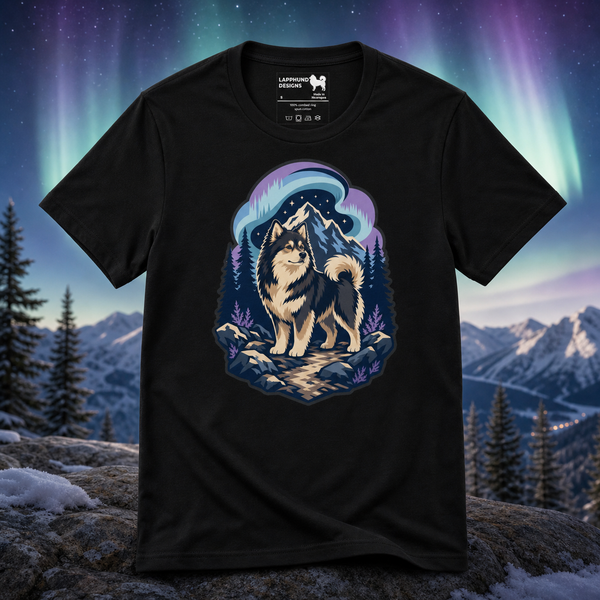

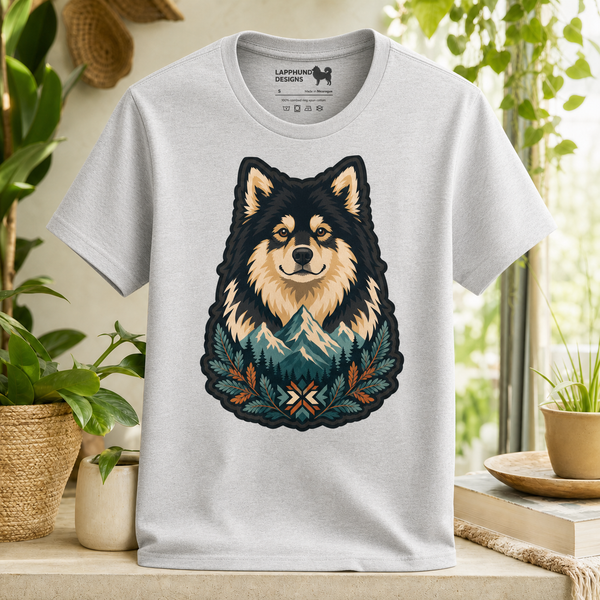



Halloween with a Finnish Lapphund: candy, costumes, doorbells and Kekri
The doorbell is the whole problem. A Finnish Lapphund spends eleven months of the year learning t...

The first time I sat down to properly groom Timber, I had a cheap brush, a pile of fur the size of a second dog, and no idea what I was doing. Two Finnish Lapphunds later, I can tell you the work itself is simple. It is a few right tools, one technique, and showing up twice a week.

This is the hands on manual: tools, technique, bath day, mats, and the bits people skip. If you want the wider routine of walks, feeding and vet care, that lives in the Finnish Lapphund care guide. Anything to do with skin, coat or health is a conversation for your vet, because this is general information and not veterinary advice.
A Finnish Lapphund has a double coat. A long, harsh, weatherproof outer coat sits over a soft, very dense undercoat. The guard hairs shed water and dirt. The undercoat insulates against Arctic cold and against summer heat. This is the coat the Sami relied on when these dogs worked reindeer above the Arctic Circle.
Two things follow. The coat is breed defining, which is why a flat coat or a missing undercoat is a fault under the breed standard. And it sheds, moderately all year and heavily during a seasonal blow once or twice a year. A Lappy coat is also low odour and fairly self cleaning, which surprises people. It is not a low allergen coat, and the breed is not hypoallergenic. The fur volume side of things is covered in do Finnish Lapphunds shed a lot.
Less than the pet store would like. A slicker brush, an undercoat rake and a good steel comb handle almost everything. The Finnish Lapphund Club of America's own kit is a slicker brush or palm pin, a greyhound comb, a wooden handle comb, an undercoat rake and a stripping knife, with one hard rule attached to the last one (FLCA, Lapphund Grooming).

The stripping knife only ever touches the muzzle and the front of the legs. Used on the body it breaks and damages the hair. A high velocity dryer is the optional upgrade that changes shedding season, because it blows the loose undercoat out before it reaches your floor.
| Tool | What it does | When to use it |
|---|---|---|
| Slicker brush | Lifts the coat, catches loose hair and small tangles | Every session, all year |
| Undercoat rake | Reaches deep and pulls out dead, packed undercoat | When dead hair builds up, and heavily during a coat blow |
| Steel or greyhound comb | Proves you reached the skin and finds hidden tangles | Final check after brushing and after drying |
| High velocity dryer | Blows out loose undercoat and dries to the skin | After baths and during a coat blow |
| Stripping knife | Tidies stray hair on the muzzle and front of the legs only | Occasional neatening, never on the body |
| Nail grinder | Shortens nails without the crunch of clippers | Every 3 to 4 weeks, in three second bursts |
A couple of times a week for most of the year, and every day during the coat blow. The Finnish Lapphund Club of America lists weekly brushing as the minimum and notes that keeping up every one to two weeks means you will not even need the undercoat rake (FLCA, Lapphund Grooming). Vet reviewed PetMD recommends weekly brushing with extra attention during the heavy shedding seasons (PetMD, Finnish Lapphund).
Regular brushing is about prevention rather than looks. A Lappy coat resists matting if you stay on top of it. Skip three weeks in the middle of a blow and the loose undercoat gets trapped in the guard hairs and starts to felt. Ten to fifteen minutes twice a week keeps ahead of it. An hour of rescue work does not.
One rule saves a lot of grief: Brush before a bath, never after. Water tightens an existing mat into a solid knot that is far harder and more painful to take apart.
Line brushing means working in thin sections, from the skin outward, so nothing is left packed underneath. The FLCA starts at either side of the rear, lifts the coat and combs down from the hock (FLCA, Lapphund Grooming). Here is the order I use on Timber.
The comb check is the whole method. Brushing only the top layer looks fine and leaves a packed mat underneath, and you will not find it until it is tight against the skin.

Bathe about once a month, or whenever your dog is properly dirty. The FLCA washes a pet Lappy roughly monthly, and PetMD says the same (FLCA, PetMD). Every four to eight weeks is fine for a dog that stays clean. Over bathing strips the oils that make the outer coat weatherproof.
Use a dog shampoo, never human shampoo, which sits at the wrong pH for dog skin. Rinse for far longer than feels necessary, because leftover shampoo irritates skin and dulls the coat. Then comes the step almost everyone skips.
Dry the undercoat completely. A double coat holds water against the skin, and a damp undercoat is how hot spots and that musty smell start. The FLCA towel dries first, then runs a high velocity dryer while working the slicker brush through the coat, and combs only once the dog is bone dry (FLCA, Lapphund Grooming). A bath and a full blow dry in the middle of a coat blow is the fastest deshedding tool there is.

Work from the outside in, and hold the hair at its base. The mat spots on this breed are predictable: behind the ears, in the armpits, in the britches on the back of the thighs, and under a collar. Check those four places every session and you will rarely meet a serious mat.
When you find one, tease it apart with your fingers first, then use the end teeth of the comb on the outer edge, a little at a time. Gripping the fur close to the skin means you are pulling against your own hand instead of the dog. Never bathe a matted dog. If a mat is tight against the skin, hand it to a groomer or your vet, because skin under a mat is often sore and sometimes infected.
These four take five minutes between them once the habit is set.
Start before the coat needs it. A twelve week old Lappy has almost no undercoat, so those first sessions are pure training. Handle the feet, look in the ears, run the brush over the body for thirty seconds, then stop while the puppy is still happy.
Introduce the noisy tools separately from the job they do. Run the grinder near the puppy and feed treats without touching a nail. Turn the dryer on across the room. Vets recommend exactly this kind of graded handling practice, because a dog that has rehearsed the sensation is a dog that stands still for it at eight years old (VCA Animal Hospitals, Handling Exercises). Grooming a Lappy who never learned this is the hardest version of the job, and it is avoidable. A few of us mark the occasion with a Grooming Day sticker sheet on the tub cupboard, which is at least more cheerful than a fur drift.
Not for routine coat care. Most Lappy owners do everything at home with a slicker, a rake and a comb, and the club's own guidance is written for owners rather than salons. A groomer earns their fee in three situations.
If you do book one, say clearly that the dog must not be shaved or scissored into shape, and ask whether they have worked on Nordic double coats before. A groomer who reaches for clippers on a spitz is the wrong groomer.

No, unless your vet asks for it for a medical reason. This is the one grooming rule with no exceptions. The coat is not a winter jacket you can take off. It insulates in both directions, and removing it does lasting damage.
The American Kennel Club is direct about the mechanism. On a shaved double coat the undercoat can outpace the topcoat as it regrows, leaving an uneven coat that no longer functions. A shaved dog also becomes more vulnerable to overheating, sunburn, dry skin, ingrown hairs and parasites (AKC, Double-Coated Dog Breeds). So when July arrives and your Lappy is panting on the kitchen tiles, the answer is shade, water, a cool floor and a well brushed coat that lets air reach the skin. If you love how the natural coat looks, our breakdown of Finnish Lapphund colours explains how the patterns work.
Once the tools and the rhythm are in place, grooming turns into one of the better parts of owning this breed. For Timber and Tundra it is a standing weekly cuddle that happens to remove a grocery bag of fur. Brush, bathe when needed, dry properly, leave the clippers in the drawer, and your Lappy stays comfortable through every season. We draw the fur jokes onto things you can wear on brushing day, including the Floof Management tee and the rest of our Finnish Lapphund t-shirts, because anyone who has lived through a coat blow has earned the joke.
A couple of times a week most of the year, and daily during the seasonal coat blow in spring and autumn. The Finnish Lapphund Club of America treats weekly brushing as the minimum. Work in sections down to the skin rather than skimming the top coat.
A slicker brush, an undercoat rake and a steel comb cover routine grooming. A high velocity dryer is the optional upgrade that transforms shedding season. A stripping knife is only ever used on the muzzle and the front of the legs, because on the body it breaks the hair.
Brush regularly and reach the skin, checking behind the ears, in the armpits, in the britches and under the collar. A Lappy coat rarely mats if you stay consistent. Never bathe a matted dog, because water tightens the knots.
About once a month, or every four to eight weeks for a dog that stays clean. Use dog shampoo, rinse thoroughly, and dry the undercoat completely so moisture is not trapped against the skin.
Usually not. Most owners manage at home with three tools. A groomer is worth booking for a deshedding bath and blow dry during a heavy coat blow, or for mats that are already tight to the skin. Tell any groomer that the coat must not be shaved or scissored.
No. The double coat insulates against heat as well as cold, and the AKC warns that it often regrows uneven and leaves the dog more exposed to overheating and sunburn. Use shade, water and a well brushed coat to keep your Lappy cool instead.

Written by Jill, co-founder of Lapphund Designs. Jill lives in Castlegar, BC with her husband and their two Finnish Lapphunds, Timber and Tundra.
Every design in the shop starts from the real Finnish Lapphund. See every design Pick your Lappy's coat
Every Finnish Lapphund has an invisible boundary around their food bowl that humans must respect at all times.
The doorbell is the whole problem. A Finnish Lapphund spends eleven months of the year learning t...

I have heard our breed called a Lap-a-hound, a Finnish Lap Hound and, once, a Finnish Lampshade. ...

A few times a month somebody sends me a photo of a fluffy dog and asks whether it is part Finnish...
Comments (0)
Leave a comment