




Halloween with a Finnish Lapphund: candy, costumes, doorbells and Kekri
The doorbell is the whole problem. A Finnish Lapphund spends eleven months of the year learning t...

Owner to owner: yes, Finnish Lapphunds shed. When Timber blows his coat every spring I could build a second dog out of what comes off the brush. What nobody tells you before you fall for that curled tail is how manageable it becomes once you understand the coat. So if you are wondering whether a Lappy and your favourite black sweater can share a house, here is the plain answer.

Yes. The Finnish Lapphund is a moderate to heavy shedder that loses some hair year round, with two heavier seasonal coat changes. Purina UK rates the breed 3 out of 5 for shedding and says that, like all spitz types, they shed (Purina UK, Finnish Lapphund). Vet reviewed PetMD describes a lot of stray fur, with the heaviest periods in spring and autumn (PetMD, Finnish Lapphund).
For most owners this lands as a routine rather than a deal breaker. The shedding comes from the same thick double coat that kept these dogs working reindeer in Arctic Finland. Once you work with that coat, brushing season becomes part of the rhythm of the year. This guide is about the fur itself: how much, why, and how to keep it off your furniture. The brushing technique lives in the Finnish Lapphund grooming guide.
Because they carry a double coat, and shedding is how a double coat works. The UK breed standard describes an outer coat that is long, coarse and straight, over a soft and dense undercoat, profuse all over, with males carrying an even more abundant mane (The Kennel Club, Finnish Lapphund breed standard).

The dense undercoat is the part that comes out in volume. The harsh outer guard coat sheds far less, and a lot of the loose undercoat gets caught in those guard hairs instead of dropping cleanly, which is why brushing matters more than vacuuming. Shedding at this scale is normal and healthy for the breed. It is not a sign that anything is wrong.

A coat blow is when a double coated dog releases its undercoat in large clumps as the seasons turn. Hill's describes it as the undercoat coming out in large clumps in preparation for summer (Hill's Pet, Shedding Seasons). The spring blow thins the coat for warm weather. The autumn blow makes room for a heavier winter coat.
On duration, the American Kennel Club says a shedding season usually lasts from a few weeks to a couple of months (AKC, Managing Dog Shedding). That matches what I see here. Timber's spring blow runs about three weeks of serious fur, and Tundra's stretches longer and starts later. Two dogs, same house, different calendars.
During the seasonal coat changes, and those are triggered by light and temperature rather than the date. The AKC states that shedding is primarily triggered by changes in daylight and temperature (AKC, Managing Dog Shedding). Hill's adds that time spent indoors under artificial lighting and temperature control can change when and how much a dog sheds (Hill's Pet).
The practical version: A Lappy who lives mostly indoors tends to shed more evenly across the whole year rather than in two sharp peaks. A Lappy who spends real hours outside, as ours do here in the Kootenays, gives you two distinct blows and quieter months between them. Here is the year as it plays out.
| Season | What is happening | Grooming response |
|---|---|---|
| Spring | Coat blow, shedding the winter undercoat | Brush daily, undercoat rake, a bath and full blow dry to speed it up |
| Summer | Lighter, routine shedding | Brush a couple of times a week |
| Autumn | Coat blow, growing in the heavier winter coat | Brush daily, undercoat rake, watch the britches for mats |
| Winter | Routine shedding, full thick coat | Brush a couple of times a week |
You will never reach zero. You can get close enough that guests do not notice, and it takes less effort than people assume. The single biggest lever is brushing, because fur caught in a rake never reaches the carpet. Everything below is what two Lappies and a lot of coat blows have taught me.
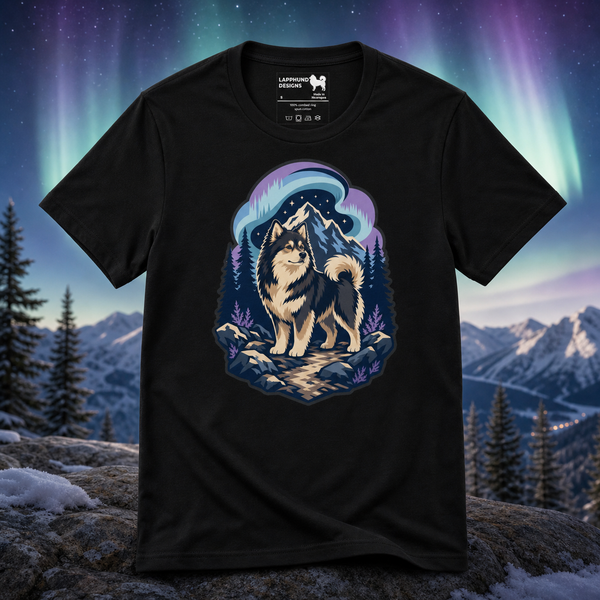
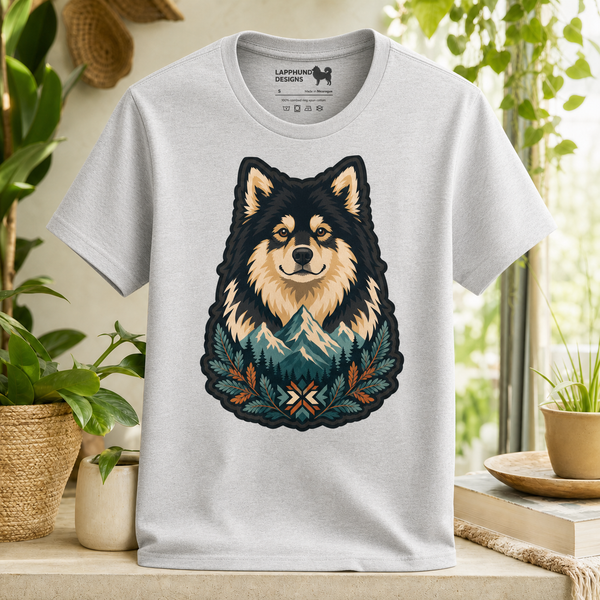
Fur on your coat is a permanent condition around here, so I stopped fighting it and started wearing the joke. The Coat Blowout Survivor tee was drawn in April for exactly this reason, and the Born To Floof tee is the black coat version.

Short daily sessions, an undercoat rake, and one bath with a proper blow dry in the middle of it. The FLCA recommends brushing every one to two weeks as a floor and notes that owners who keep up rarely need the rake at all, which tells you how much of the work is timing (FLCA, Lapphund Grooming).
The AKC suggests switching from a slicker to a coat rake or deshedding tool during heavy shedding periods, and notes that a bath helps remove loose hair (AKC, Managing Dog Shedding). A high velocity dryer takes that further, because the moving air lifts dead undercoat out in sheets. Ten minutes a day for three weeks beats a two hour rescue session, and your dog will tolerate it far better.
Two things I learned the hard way. Do the rake work before the bath, so you are not washing a coat full of dead hair. And warm the dog up first with a five minute walk, because a coat that has been moving releases more than a coat that has been asleep on the floor.
Diet supports coat quality, and the details belong with your vet. VCA reports that up to 35 percent of a dog's daily protein intake goes to maintaining skin and coat. The same page names linoleic acid, the omega-3 fatty acids EPA and DHA, zinc, biotin and B vitamins as the nutrients behind a healthy coat (VCA, Skin, Coat and the Role of Diet).
A complete and balanced food built for your dog's life stage already carries those nutrients. This is general information and not veterinary advice, so talk to your veterinarian before you change the diet or add a supplement. Portions and food choice are covered in our Finnish Lapphund feeding guide.
They are a poor choice for an allergy household. The Finnish Lapphund is not hypoallergenic, and the dense undercoat carries a lot of dander with it when it lets go. The allergen most people react to is a protein in dander and saliva rather than the hair itself, so a heavy shedder spreads more of it around the house.
Some allergy sufferers do live with Lappies, with air filtration, hard floors, a no dogs on the bed rule and a lot of brushing done by someone else. It works for some people and fails for others. We go through the honest version in are Finnish Lapphunds hypoallergenic.
Sudden, patchy or asymmetric hair loss is not seasonal shedding, and it earns a vet visit. VCA describes a healthy dog as one that does not shed excessively and has a shiny coat free from dandruff or greasiness. Excessive shedding with a dull, dry coat can point to an inadequate diet, stress, allergic skin disease or an underlying medical problem (VCA Animal Hospitals, Coat and Skin Appearance in the Healthy Dog).
There is also a recognised condition called seasonal flank alopecia, where a dog loses hair in well demarcated patches on the flanks on a repeating annual cycle, usually starting in autumn with regrowth in spring. It is a cosmetic condition and it is distinct from the diffuse undercoat loss of a normal blow (VCA Animal Hospitals, Seasonal Flank Alopecia). If the pattern of your dog's fur loss looks like bald patches rather than an all over thinning, get it looked at. You know your dog's normal better than anyone.
No. Shaving removes the coat that regulates temperature, and it does not reduce shedding in any useful way, since the undercoat keeps growing and now has nowhere to go. The AKC warns that a shaved double coat can regrow uneven, because the undercoat outpaces the topcoat, and that the dog becomes more exposed to overheating, sunburn and skin damage (AKC, Double-Coated Dog Breeds).
The FLCA restricts even a stripping knife to the muzzle and the front of the legs, warning that using it on the body breaks and damages the hair (FLCA, Lapphund Grooming). Deshedding is the supported alternative. Take the dead undercoat out with a rake, a comb and a dryer, and leave the coat itself alone.

Here is the truth about Lappy shedding. It comes with the territory, and it is a small price for one of the warmest, most joyful breeds going. Fur on your jacket means you have a Finnish Lapphund, and around here that is worth being proud of. I started Lapphund Designs because nothing in the shops looked like my two, so every design is drawn breed true across our Finnish Lapphund t-shirts, mugs and sticker sheets. Come and join the Lappy Pack, fur and all.
Yes. Finnish Lapphunds are moderate to heavy shedders. They lose some hair year round and shed much more during two seasonal coat changes. Purina UK rates the breed 3 out of 5 for shedding and notes that, like all spitz types, they shed. Regular brushing keeps it manageable.
They carry a double coat: a long, coarse outer coat over a soft, dense undercoat, developed to protect them while herding reindeer in Arctic Finland. The dense undercoat is what comes out in volume, and that is normal and healthy for the breed.
A coat blow is when a double coated dog sheds its undercoat in large clumps as the seasons change, usually spring and autumn. The American Kennel Club says a shedding season generally lasts from a few weeks to a couple of months. Individual dogs vary, even in the same household.
Brush outdoors a couple of times a week and daily during a blow, because fur in the rake never reaches the sofa. Use washable throws on the sofa and car seat, a vacuum with a motorised brush head, and a rubber squeegee to lift packed hair out of carpet and upholstery.
No. The coat stays natural and untrimmed. Deshedding is the correct approach, which means pulling dead undercoat out with a rake and comb. The AKC warns that a shaved double coat can regrow uneven and leaves the dog more exposed to overheating and sunburn.
When it is sudden, patchy or comes with a dull, dry coat. VCA flags excessive shedding alongside dandruff, greasiness or recurring skin problems as reasons to see your vet. Symmetrical, well demarcated bald patches on the flanks can point to seasonal flank alopecia, a recognised condition worth having diagnosed.

Written by Jill, co-founder of Lapphund Designs. Jill lives in Castlegar, BC with her husband and their two Finnish Lapphunds, Timber and Tundra.
Every design in the shop starts from the real Finnish Lapphund. See every design Pick your Lappy's coat
Finnish Lapphunds were originally semi-wild dogs that gradually became domesticated through their relationship with the Sami people.
The doorbell is the whole problem. A Finnish Lapphund spends eleven months of the year learning t...

I have heard our breed called a Lap-a-hound, a Finnish Lap Hound and, once, a Finnish Lampshade. ...

A few times a month somebody sends me a photo of a fluffy dog and asks whether it is part Finnish...
Comments (0)
Leave a comment