


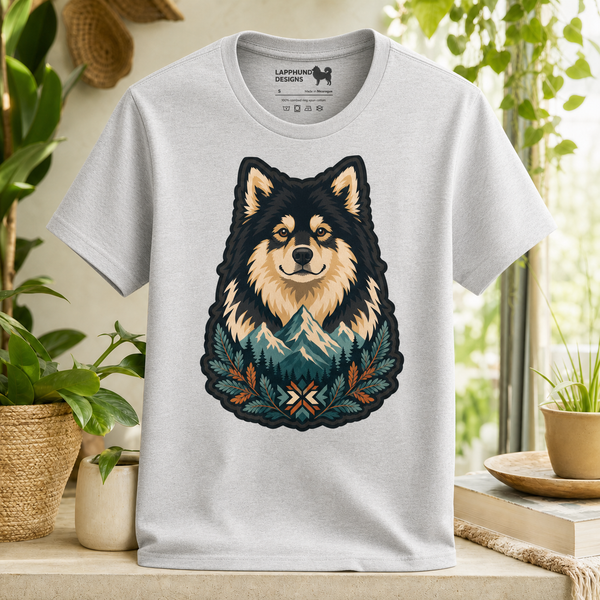



Halloween with a Finnish Lapphund: candy, costumes, doorbells and Kekri
The doorbell is the whole problem. A Finnish Lapphund spends eleven months of the year learning t...

The first time my Finnish Lapphund Timber heard the mail truck, he announced it like the village was under siege. If you are wondering whether that is normal, here is the owner to owner answer. Yes, this is a vocal breed, and it is vocal on purpose. The good news is that the barking makes sense once you know where it comes from, and there is a lot you can do to keep it from taking over your home.

Yes. The Finnish Lapphund is a vocal breed, and you should expect frequent barking. The American Kennel Club is blunt about it, saying these dogs "are still barkers today" (AKC, Finnish Lapphund facts). The AKC breed standard, hosted by the Finnish Lapphund Club of America, notes that excited barking is typical for the breed (AKC breed standard, FLCA).
Sharp alarm noise is only part of the repertoire. Lappies have a wide range of high pitched vocalizations: the grumble when you are late with dinner, the yodel at the door, the muttering conversation Tundra keeps up while she settles. Owners learn to tell them apart within a few weeks. That whole cast of expressions is the reason we drew the Talking Faces sticker sheet. If you are still deciding whether the breed fits your life, the vocal nature is one of its defining traits, so set your expectations early. For the bigger picture on living with one, our Finnish Lapphund care guide covers grooming, exercise, and health.
Their bark is a working tool. The Sami people of northern Finland trained the Finnish Lapphund to move and control reindeer with a sharp bark rather than by nipping at the heels (AKC, Finnish Lapphund history). Where a Border Collie might crouch and stalk, a Lappy circles a straying reindeer with what the AKC calls "a menacing bounce" until the annoyed animal rejoins the herd.
The scale of that job explains a lot. The AKC describes herds numbering nearly half a million reindeer that travelled up to 3,000 miles, so a dog that could be heard across open Arctic country was essential. The same AKC history reports that the Sami spent roughly 5,000 years breeding for a distinct ear splitting bark (AKC, Finnish Lapphund history). The breed is ancient, with Lapponian type dog remains reportedly dating back to around 7000 BC.
On top of the herding bark, the breed carries a strong startle reflex, also bred in for herding work, which feeds quick alert behaviour at sudden sounds and movement (AKC, Finnish Lapphund facts). So when your Lappy sounds off at a deer in the yard or a knock at the door, that is thousands of years of reindeer work talking. It is the same instinct behind the Reindeer Herder at Heart tee I keep restocking, because owners recognise their own dog in it immediately.

Yes, and the standard is careful about where it draws the line. The AKC breed standard treats excited barking as normal and firmly rules out aggression. The exact wording is: "Although excited barking is typical, excessive sharpness and snarling are by no means acceptable, not even in males toward other males" (AKC breed standard, FLCA).
The same standard describes the temperament as calm, friendly, and very submissive, possibly a little distant or aloof though never shy, and "extremely active and noisy" when herding reindeer (AKC breed standard, FLCA). The breed's official classification reinforces the alert role. The FCI places the Finnish Lapphund in Group 5, Spitz and primitive types, Section 3, Nordic Watchdogs and Herders, under Standard No. 189, as a herder and watchdog that today also serves as a companion (FCI Standard No. 189). A watchdog that alerts you to anything new is doing exactly what it was built to do. Vocal behaviour is the breed working as designed.
They are at the loud end of a loud family. Nordic spitz breeds are alert vocalizers as a group, and the Finnish Lapphund sits alongside the Finnish Spitz and the Norwegian Elkhound in that respect. The distinction worth knowing is what the bark was for. A Finnish Spitz was bred to bark at treed game and hold the hunter's attention. A Lapphund was bred to bark at livestock and move it along. So a Lappy's barking tends to fire at movement, arrivals, and change, and it usually stops once the situation resolves.
Compared with a silent working breed such as a Border Collie, the difference is stark. If you have owned a quiet herding dog before, expect a real adjustment. Our comparisons of the Finnish Lapphund and the Finnish Spitz and the Finnish Lapphund and the Siberian Husky go through the other daily differences.
Most nuisance barking in this breed comes from boredom and under stimulation. A Lappy who does not get enough physical exercise and mental work will find its own job, and that job is often barking at everything. The Finnish Lapphund Club of America says the same thing from the other direction, noting that problem barking usually means a bored dog asking for attention, and that a Lappy without regular human contact becomes a nuisance barker (FLCA, Living with a Lapphund).

It helps to tell two kinds of barking apart. Normal alert and excited barking at the doorbell, a squirrel, or you coming home is breed typical and brief. Distress barking, the kind that goes on and on while your dog is alone or frightened, signals an unmet need rather than bad manners. The reassuring part is that this is manageable. The AKC frames barking as a trainable trait, noting that positive training at home helps curb the bark and that teaching your Lappy when it is okay to bark is an important part of training (AKC, Finnish Lapphund facts).
Start with needs, then add training. The single most effective thing you can do is meet your Lappy's exercise and enrichment needs first, and layer the cues on top. Here is the order that works, from first line to last.
For a wider plan that ties the "quiet" cue into core obedience and the breed's herding drive, see our Finnish Lapphund training guide.

It can help to match a common trigger to a calm, humane response.
| What sets the bark off | Likely reason | Humane response |
|---|---|---|
| Doorbell or knock | Alert and watchdog instinct | Cue "quiet," reward calm, then desensitize the doorbell sound over time |
| People or dogs out the window | Herding and alert drive | Block the view, move the dog away from windows, redirect to a settle mat |
| Barking when home alone | Boredom or separation distress | More exercise and enrichment, graduated alone time, see your vet if it persists |
| Barking at you for attention | Learned that barking works | Ignore the bark, reward the quiet that follows, stay consistent every time |
| Fence line or garden barking | Patrolling and passing traffic | Supervise garden time, call the dog in before the bark builds, add privacy screening |
| Night barking in an older dog | Possible pain, hearing loss, or cognitive change | Book a vet check rather than training it away |
Manage the trigger, then manage the relationship. Most complaints come from barking that happens while you are out, so start by finding out what your dog actually does alone. Record ten minutes on your phone. Owners are often surprised in both directions.
Then work through the practical list. Move the dog's resting spot away from the front door and the street facing window. Close blinds at the height your dog looks out. Leave background sound on. Give a long lasting chew as you leave, so departure predicts something good. Keep garden time supervised in the early morning and late evening, when sound carries and patience is short. And talk to your neighbours before anyone has to complain, because a person who knows you are working on it is far more forgiving than a person filing a form. Our guide to Finnish Lapphunds in apartments covers the small space version of all this.
Sometimes, and it is worth separating boredom from distress, because the two need different plans. Boredom barking is rhythmic, starts a while after you leave, and stops when something interesting happens. Separation distress usually starts within minutes of departure and comes with other signs. VCA describes dogs who become extremely anxious and show vocalizing, destruction, or house soiling when separated from their owners, along with restlessness, trembling, drooling, or refusing food, and an over the top greeting on your return (VCA Animal Hospitals).
Finnish Lapphunds are a sociable breed that was bred to live with people, so long days alone are a poor fit. VCA's approach is graduated mock departures, starting with seconds or minutes while the dog is relaxed, then lengthening the absences randomly and slowly, and never jumping from a five minute absence to a thirty minute one. If your dog panics rather than grumbles, treat it as a welfare problem and get help. Our full guide to Finnish Lapphund separation anxiety works through the whole plan.
Use reward based methods and skip the aversive gadgets. Veterinary behaviour authorities are united on this. The American Veterinary Society of Animal Behavior's 2021 position statement recommends that only reward based methods be used for all dog training and behaviour modification, and states there is no role for aversive training in behaviour modification plans (AVSAB position statement).
Aversive tools such as shock or e-collars, citronella and ultrasonic bark collars, choke chains, and water spray carry real risks. AVSAB links them to fear, anxiety, stress, aggression, and a worse relationship between dog and owner, and finds no evidence that they work better than reward based methods in any context. On top of the welfare concerns, they often fail at the practical job. VCA notes that most dogs simply learn the difference between when a bark collar is on and off (VCA Animal Hospitals).
Talk to your veterinarian or a veterinary behaviourist if the barking is driven by separation distress or fear, or if it appears suddenly in an older dog. These causes need a plan beyond basic obedience, and sudden vocal changes in a senior dog can have a medical or cognitive component worth ruling out (VCA Animal Hospitals). Pain is an underrated cause of new noise in a middle aged or older dog, and so is hearing loss, since a dog who cannot hear itself often gets louder.
This article is general information, not veterinary advice. Every dog is different, so build any plan with your own veterinarian.
Finnish Lapphunds are vocal by design. The bark is a working trait shaped by thousands of years of reindeer herding, so frequent alert and excited barking is normal and nothing to apologize for. Excessive barking is usually a solvable boredom or anxiety signal. Lead with exercise and enrichment, teach a "quiet" cue, manage the environment, reward calm, avoid aversive tools, and loop in your vet for anything driven by fear or a sudden change.
Living with a loud, big hearted breed is part of the joy, and it is the whole reason I started drawing Lappies in the first place. The mug I reach for on the mornings after a long night of neighbourhood updates says coffee stops the barking, which is a lie my dogs and I both enjoy. The rest of the Finnish Lapphund mugs are drawn breed true, in every coat, so yours actually looks like the dog currently telling you about the postman.
Watchdog breeds bark for different reasons, and I look at how a Lappy's barking compares with a Keeshond's in my comparison of the two.
If a quiet house is non-negotiable for you, it is worth reading how the Lappy compares with the much quieter Eurasier before you commit to this breed.
Trick-or-treat night is the worst doorbell test of the year, and the Halloween doorbell plan is the management version of everything above.
Yes. The Finnish Lapphund is a vocal breed, and the AKC notes they are still barkers today. Their breed standard states that excited barking is typical. Owners should expect frequent alert and excited barking, which is rooted in the breed's reindeer herding history.
Their bark is a working trait. The Sami trained Lapphunds to move and control reindeer with a sharp bark rather than by nipping, and according to the AKC's breed history the Sami spent roughly 5,000 years breeding for a distinct ear splitting bark. Today that shows up as strong alert and excited vocalizing.
You cannot remove the instinct, and you can manage it. The AKC says positive training helps curb the bark and that teaching your Lappy when it is okay to bark is an important part of training. Veterinary guidance recommends teaching a "quiet" cue, rewarding calm behaviour, and never punishing barking.
Most nuisance barking in this breed comes from under stimulation and boredom rather than temperament. The breed club says problem barking usually means a bored dog asking for attention, and that a Lappy left without regular human contact becomes a nuisance barker. More daily exercise and mental enrichment usually help. If the barking is driven by fear or separation distress, or appears suddenly in an older dog, talk to your vet.
Veterinary behaviour authorities discourage them. The AVSAB recommends only reward based training methods, noting aversive tools risk fear, anxiety, aggression, and a worse relationship with the owner. VCA adds that most dogs simply learn when a bark collar is on versus off. Use positive, reward based methods instead.
Talk to your veterinarian or a veterinary behaviourist if the barking stems from separation distress or fear, or if it appears suddenly in an older dog, since these can have behavioural, medical, or cognitive causes that need more than basic training. Pain and hearing loss are easy to miss. This article is general information and not a substitute for professional veterinary advice.

Written by Jill, co-founder of Lapphund Designs. Jill lives in Castlegar, BC with her husband and their two Finnish Lapphunds, Timber and Tundra.
Every design in the shop starts from the real Finnish Lapphund. See every design Pick your Lappy's coat
A Lappy greeting involves full-body wiggles, helicopter tail, and sounds that can only be described as joyful screaming.
The doorbell is the whole problem. A Finnish Lapphund spends eleven months of the year learning t...

I have heard our breed called a Lap-a-hound, a Finnish Lap Hound and, once, a Finnish Lampshade. ...

A few times a month somebody sends me a photo of a fluffy dog and asks whether it is part Finnish...
Comments (0)
Leave a comment