



Finnish Lapphund Puppy Coat: Colour Changes, Ears and the Adult Coat
What changes as a Finnish Lapphund puppy grows up: the soft puppy coat giving way to the harsh ad...

A new Finnish Lapphund puppy learns something every waking minute, whether you mean to teach it or not. This guide covers the puppy problems new owners search for in the first months: biting, toilet training, the crate, the nights, the first time alone, the first commands and puppy class. Every step comes from a veterinary or welfare source you can check.

Start on the first day, with rewards and short sessions. The American Veterinary Society of Animal Behavior (AVSAB) recommends "that only reward-based training methods are used for all dog training" (AVSAB, humane dog training position statement). A reward can be a treat, a toy, a game or your praise.
Keep each lesson short. An AKC trainer, Paisley Lunchick, RVT, advises sessions of "just five to 10 minutes" that always end on a good note (AKC, five basic commands).
Plan for a busy puppy. The Southern Finnish Lapphund Society says the breed needs plenty of mental stimulation, that this "is most noticeable when young", and that you should "be prepared for a very demanding puppy" (Southern Finnish Lapphund Society, FAQ). The Finnish Lapphund Club of America calls the Lappy "intelligent and quick to learn" and also "independent and strong-willed" (FLCA, Living with a Lapphund).
This guide stays with the first months. For adult training, recall and loose lead work, read the Finnish Lapphund training guide. If you are still setting up the house, start with the first week with a Finnish Lapphund puppy.
Because puppies explore and play with their mouths. Dogs Trust calls puppy mouthing "extremely common and a normal part of development" (Dogs Trust, mouthing and puppy biting). The RSPCA explains that puppies learn the rules of play from other dogs. When a puppy bites a playmate too hard, the game stops, and that teaches a soft mouth (RSPCA, mouthing and play biting).
The ASPCA calls this skill bite inhibition, "a dog's ability to control the force of his mouthing" (ASPCA, mouthing, nipping and biting in puppies).
Two things make biting worse. The first is a tired puppy. Dogs Trust says puppies need 18 to 20 hours of sleep a day, and that an overtired puppy often shows "zoomies, wanting to play, and mouthing" (Dogs Trust). The second is sore gums. Dogs Trust says baby teeth begin to fall out at around 12 weeks, and the adult teeth are usually all in by seven months. The RSPCA says chewing hard objects eases teething, so keep chew toys within reach.
One myth to drop. Puppy nipping is not a herding trait in this breed. The AKC says Finnish Lapphunds "used barking to control the herd" (AKC, Finnish Lapphund facts). Every breed goes through the biting stage.
Redirect, and stay calm. These steps come from the RSPCA, Dogs Trust and the ASPCA.
Skip punishment. Dogs Trust says shouting, hitting or pushing your dog away "can cause fear, making biting more likely in the long term". The ASPCA warns that slapping or hitting a puppy for playful mouthing "can cause them to bite harder".
Most mouthing is play. The RSPCA notes that a mouthing dog usually has a relaxed body, and that a dog showing signs of aggression needs a full assessment by a qualified behaviour expert. If your puppy stiffens, freezes or bites in a way that frightens you, speak to your vet.

Take your puppy out often, at the right moments, and reward success. The AKC uses a simple guide: a puppy's age in months, plus one, is about the most hours it can hold on between toilet breaks. Its example is a three month old puppy, which gives four hours (AKC, puppy potty training timeline).
The same AKC article gives the moments that matter. Go out the moment your puppy wakes, first thing in the morning, and 5 to 30 minutes after a meal. Watch for sniffing, wandering off, zoomies, whimpering or a run to the door.
| When to go out | Why it matters |
|---|---|
| The moment your puppy wakes up | The AKC says to go out the moment your puppy wakes |
| 5 to 30 minutes after a meal | The AKC timing for after eating |
| Soon after a big drink | The AKC says to treat water like a meal |
| When sniffing, circling or heading for the door | These are the signs the AKC lists |
| Last thing before bed | The AKC calls it "one last potty break" |
Accidents will happen. The AKC says "don't punish your puppy". If you catch one in the act, interrupt with a calm sound, take the puppy outside, and praise it when it finishes there. Clean the spot with a pet stain cleaner so the smell does not draw your puppy back.
How long does it take? There is no fixed date, and I will not promise one. The AKC's chief veterinarian, Dr. Jerry Klein, says that "if training begins early, a 6-month-old puppy is usually able to be depended on most of the time to eliminate outside". Most of the time is the honest phrase. He also advises a vet check if progress stalls, because a urinary tract infection or another health problem can be the cause.
Make the crate a safe den, and never a jail. Humane World for Animals says the crate "should be large enough for your dog to stand up and turn around in", and that crates "should never be used for punishment" (Humane World for Animals, crate training 101).
Start slowly. Humane World suggests taking the door off or propping it open, so your puppy can explore the crate in its own time. The AKC adds that you should avoid forcing a dog in, because that can build a bad link with the crate (AKC, crate training).
Watch the clock. Humane World says puppies under six months "shouldn't stay in a crate for more than three or four hours at a time", because they cannot hold their bladder or bowels that long. It also warns that a crate will not fix separation anxiety.
There is a payoff later. AVSAB says puppies used to a crate "will be less stressed" if they ever stay at a vet hospital or travel by car or plane, and that crates should be places of comfort or play (AVSAB, puppy socialization position statement).

Not at first, and no source gives a firm age. Plan for night trips in the first weeks. Veterinarian Dr. Brittany Grenus writes on PetMD that you should "expect to take your puppy out a few times during the night the first few weeks", and that puppies can usually go about 4 to 6 hours overnight (PetMD, surviving the first night with a puppy).
Put the crate in or near your bedroom. Both the AKC and PetMD suggest it. You will hear the whimper that means it needs to go out.
Expect some crying. Dr. Grenus says crying in the first nights, or even weeks, is very common. Crying that starts as you settle the puppy in the crate is often stress. Crying in the middle of the night may mean it needs the toilet, so take your puppy out, then back to bed. The AKC warns that letting a puppy out of the crate because it whined teaches it to whine next time. Humane World adds: "Never punish them for whining."
The night trips shrink as your puppy's bladder grows. The Finnish Lapphund puppy growth chart shows what is changing month by month.
Teach it in small steps, from the first week. AVSAB says puppies need scheduled time to play alone with their favourite toys, such as a stuffed food toy, or to nap in a safe crate or pen. It says this teaches puppies to amuse themselves and may help prevent over-attachment to their owners.
Keep absences short. The RSPCA recommends that you "don't leave your dog alone for more than four hours; for puppies much less" (RSPCA, separation-related behaviour). Its dog company page adds: "Never leave your dog alone long enough for them to become distressed" (RSPCA, dogs and company). Start with a minute in the next room and build up slowly.
Know the warning signs. The RSPCA lists barking, howling, whining, chewing near doors and windows, toilet accidents, trembling, panting, drooling, pacing and not eating while you are out. It says these signs can start within a few to 30 minutes of leaving. If you see them, shorten the absences and talk to your vet. My guide to Finnish Lapphund separation anxiety covers the full plan.
Start with the AKC's basic five: come when called, loose lead walking, sit, down and stay. Begin indoors, in a quiet room, with tiny treats.
One more lesson belongs in the first months: what you reward when your puppy yaps. The Southern Finnish Lapphund Society warns that a "positive reaction when young can result in a noisy, demanding Lapphund when older". It also says the breed "is very trainable". The Finnish Lapphund barking guide covers the quiet cue in full.
Earlier than most people think. AVSAB calls the first three months of life "the primary and most important time for puppy socialization". It says puppies can start socialization classes "as early as 7-8 weeks of age". They should have at least one set of vaccines at least seven days before the first class, a first deworming, and up-to-date vaccines through the course.
AVSAB believes it "should be the standard of care for puppies to receive such socialization before they are fully vaccinated". The reason is serious. AVSAB states that behaviour problems, not infectious disease, are "the number one cause of death for dogs under three years of age".
Pick the class with care. AVSAB says good classes are held on surfaces that are easy to clean, such as indoors, and use positive reinforcement. It also says to avoid dog parks and other busy areas used by dogs of unknown vaccine status.
Socialisation goes on at home too. AVSAB suggests handling every part of the body, new surfaces, new people and car trips. AVSAB says owners of puppies that show fear should seek veterinary guidance. The handling also pays off at grooming time, which my guide to the Finnish Lapphund puppy coat change covers.
This article is general information, not veterinary advice. Your vet knows your puppy and your area, so build the vaccine and outing plan with them.
Avoid anything that works by pain or fear. AVSAB says "there is no evidence that aversive methods are more effective than reward-based methods in any context", and that aversive methods damage "both animal welfare and the human-animal bond". It advises that they "should not be used in animal training".
The ASPCA lists scruff shaking and whacking a puppy on the nose among the things to avoid.

Reward what you like, redirect what you do not, keep sessions short, and protect sleep. Read the Finnish Lapphund puppy guide for the whole first year, and the Finnish Lapphund breed guide for the breed itself.
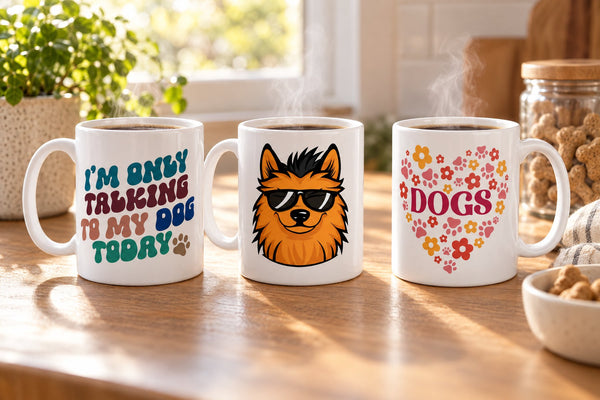
The free Colouring Box is a good quiet job for the kids while the puppy naps. The Lappy Pack weekly letter sends one useful thing a week. When you want something with your own dog on it, we draw every coat, from Finnish Lapphund mugs for the early mornings to Finnish Lapphund t-shirts in the colour your puppy is growing into.
Hold a toy whenever you play and redirect every bite onto it, as the RSPCA advises. If teeth land on you, keep still, turn away, and restart the game when your puppy is calm. Plan regular naps, since Dogs Trust says overtired puppies mouth more, and never hit or shout.
No. The AKC says Finnish Lapphunds used barking to control the reindeer herd. Mouthing is normal puppy development, and puppies learn a soft mouth through play.
There is no fixed date. The AKC's chief veterinarian says that if training begins early, a six month old puppy can usually be depended on most of the time. Take your puppy out on waking, after meals and play, and before bed.
Humane World for Animals says puppies under six months should not stay in a crate for more than three or four hours at a time. The crate should let your puppy stand up and turn around, and it should never be used for punishment.
No source gives a set age. A PetMD veterinarian says to expect a few night toilet trips in the first weeks, and that puppies can usually go about four to six hours overnight.
AVSAB says puppies can start socialization classes as early as seven to eight weeks, with at least one set of vaccines seven days before the first class and a first deworming. Confirm the timing with your vet.
Last checked: 12 November 2026.
Written by Jill, co-founder of Lapphund Designs. Jill lives in Castlegar, BC with her husband and their two Finnish Lapphunds, Timber and Tundra.
Every design in the shop starts from the real Finnish Lapphund. See every design Pick your Lappy's coat


A Lappy can hear a cheese wrapper from three rooms away but somehow cannot hear you say come when they are outside.
What changes as a Finnish Lapphund puppy grows up: the soft puppy coat giving way to the harsh ad...

There is no published Finnish Lapphund growth chart, so this guide shows which general veterinary...

A day-by-day guide to a Finnish Lapphund puppy's first week: the setup and checklist before picku...



Comments (0)
Leave a comment