





Halloween with a Finnish Lapphund: candy, costumes, doorbells and Kekri
The doorbell is the whole problem. A Finnish Lapphund spends eleven months of the year learning t...

People always ask me what my two Finnish Lapphunds are like to live with. Timber and Tundra are the gentlest, goofiest, most opinionated floofs you could share a couch with. One minute Tundra is leaning his whole body against my legs for a cuddle, and the next he is announcing, at volume, that a leaf has crossed the yard. If you are weighing up this breed, the temperament matters far more than any photo of a curled tail. So here is the owner to owner truth, backed by the breed standards and by the clubs who know Lappies best.

At their core, Finnish Lapphunds are gentle, friendly, alert and chatty. The FCI standard describes the breed as "intelligent, courageous, calm and docile" and as "friendly and faithful" (FCI Standard No. 189). The AKC standard adds "alert, agile, friendly and eager to learn", notes the breed was "never intended as guardians", and calls Lappies "particularly submissive towards people" (AKC standard).
In daily life that translates to a dog who wants to be near you, reads your mood closely, and would rather charm a stranger than challenge one. The Sami bred these dogs to herd reindeer in the Arctic, so a Lappy carries a quick startle reflex and a habit of talking. They recover fast and rarely hold a grudge. You may meet the occasional aloof moment with someone new. That reserve is normal, and it is a different thing from shyness. For the wider picture beyond personality, start with my Finnish Lapphund breed guide.
| Trait | What to expect |
|---|---|
| Affection | Very high. Loves to lean, cuddle and stay close to the family. |
| Friendliness with strangers | High, sometimes with a brief, polite reserve at first. |
| Intelligence and trainability | High. A thinking breed that learns quickly with gentle, positive methods. |
| Vocal level | High. A natural, enthusiastic barker that benefits from early training. |
| Sensitivity | High. Soft-natured, and does not respond well to harsh corrections. |
| Energy | Moderate. Active and playful, with a real off switch indoors. |
| Time alone | Low to moderate tolerance. A people-dog that prefers company. |
| Maturity | Slow. Puppy behaviour often runs well into the second year. |
Aggression is out of type for this breed, and the standards say so directly. The FCI standard lists aggression as a serious fault, and extreme shyness sits beside it (FCI Standard No. 189). A sound Finnish Lapphund greets the world with interest rather than suspicion.
What you will meet instead is noise and nudging. A Lappy alerts hard, then wants to make friends with whoever triggered the alarm. The standards do note the breed will hold its ground when pushed, which is a different thing from starting trouble. If a Lappy in front of you is genuinely aggressive or frightened, that is a reason to ask the breeder hard questions or to call in a qualified behaviourist, because it runs against the breed's written character.
Yes. Finnish Lapphunds are clever and eager to please, which is why owners call them a thinking breed. They take well to training and do well in dog sports, tracking, therapy work and search work (AKC, Finnish Lapphund facts).
Here is the catch no glossy breed page mentions. That brain comes with opinions. A bored Lappy invents its own job, and a clever Lappy tests whether you really meant "come". Keep sessions short, fun and rewarding, and the speed of learning will surprise you. With Timber, ten minutes of treats and praise beats an hour of repetition every time. For the full how-to, read my Finnish Lapphund training guide.
Because they are a soft, docile breed, harsh or heavy-handed methods land badly. Breed clubs are clear that training should be consistent and gentle, and that excessive strictness does more harm than good with this temperament (Southern Finnish Lapphund Society). Veterinary behaviour bodies say the same about dogs in general. The American Veterinary Society of Animal Behavior recommends reward-based methods and advises against aversive techniques, on both welfare and effectiveness grounds (AVSAB position statement on humane dog training).
In practice, raise your voice with a Lappy and you are more likely to get a shutdown than a lesson. These dogs were built to read subtle cues from a herder half a hillside away, so they read you closely too. Lead with patience, treats and praise, and you keep the trusting, willing partner you signed up for. When your Lappy gets something wrong, reset and try again rather than scolding. A cheerful "let us try that again" buys far more cooperation than a stern correction ever will.

Yes, and this is one of the breed's strongest suits. Lappies are naturally submissive with people, sweet-tempered and affectionate, and both the AKC and the breed clubs describe them as excellent with children. Their gentle, patient nature fits a busy household well.
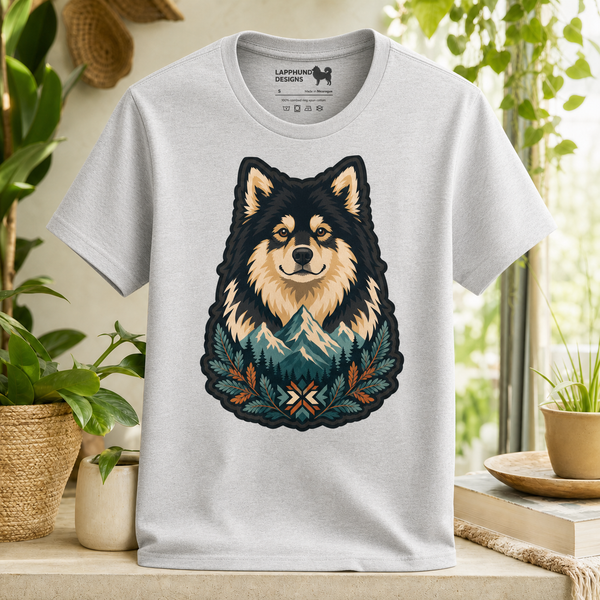
As with any breed, supervise interactions and teach children how to be calm and respectful around a dog. A Lappy's herding heritage can show up as a gentle nudge, or as the urge to follow a running, squealing toddler and organise the situation. Early guidance sorts that out quickly. The tee we drew for this is called born to herd, raised to cuddle, which is roughly the whole breed in five words. If you are still deciding whether a Lappy suits your home, my honest is a Finnish Lapphund right for you guide walks through the trade-offs, and are Finnish Lapphunds good with kids and cats goes deeper on family life.
Generally, yes. Finnish Lapphunds are sociable and usually do well with other dogs, cats and animals, especially when raised together and socialised early. They are a friendly breed rather than a scrappy one. One well-known caveat comes from the clubs: two unrelated males may not always get along under the same roof (AKC, Finnish Lapphund facts).
The other thing to plan for is prey drive. That herding background means a Lappy will happily chase squirrels, rabbits and anything else small and quick, which is exactly why the breed clubs recommend a securely fenced yard (FLCA, Living with a Lapphund). Cats they live with tend to become family. The neighbour's cat sprinting across the lawn is a different story entirely. Early, positive introductions make most of the difference.
| Good with | Rating | Notes |
|---|---|---|
| Children | Excellent | Gentle and patient. Supervise with young kids as you would any dog. |
| Other dogs | Very good | Sociable. Two unrelated males may clash. |
| Cats and pets at home | Good | Best when raised together and introduced early. |
| Small animals outdoors | Watch closely | Herding instinct means they will chase. Fence the yard. |
| Strangers | Friendly | May alert-bark first, then warm up quickly. |

Finnish Lapphunds make alert, reliable watchdogs, and they are neither guard dogs nor protection dogs. They will happily announce a visitor, a delivery or a leaf, then greet the actual person like a long-lost friend. And yes, they bark. Barking is built into the breed, because the Sami used it to move and direct reindeer, so your Lappy arrives with plenty to say.
The good news is that this responds to training. With early, consistent work you can teach a "quiet" cue and reduce nuisance barking without flattening the natural alertness that makes them useful. Timber and Tundra are far from silent, and they have learned that one or two woofs gets the message across. If your Lappy is the chatty type, the talking faces sticker sheet will look painfully familiar. The causes and the calm-down techniques are all in my Finnish Lapphund barking guide.
For moderate stretches, yes. All day, every day, no. Finnish Lapphunds are deeply social, people-oriented dogs with a strong need to be part of family life, and the breed clubs are direct about it (FLCA, Living with a Lapphund). Left alone too long, a clever, under-stimulated Lappy gets bored, anxious and loud, which usually shows up as excessive barking or chewed furniture.
A well-exercised, mentally tired Lappy can settle happily at home for a normal workday window. Build alone time up gradually from puppyhood, leave puzzle toys and safe chews, and keep departures and arrivals low-key. A tired Lappy is a quiet Lappy, and a good walk plus a five-minute training game before you leave does more for calm alone-time than any gadget. If you work long hours away from home, plan for a midday walk, a dog walker or daycare.
Real separation anxiety is a different animal from boredom, and it needs a proper plan rather than more exercise. I wrote a full guide on Finnish Lapphund separation anxiety and how long they can be left alone, including how to tell the two apart. This is general information, not veterinary advice, so if your dog is distressed when you leave, talk to your vet or a qualified reward-based behaviourist.

Later than most people expect. This is a slow-maturing breed, and puppy behaviour often runs well into the second year. The body reaches full height around twelve to fourteen months, and the brain takes longer. Owners who braced for a settled dog at one year are often still living with a teenager at eighteen months.
The adolescent stretch between roughly eight and eighteen months is where recall gets tested, barking peaks and the herding drive switches on properly. None of that is a training failure. Keep the routine boring and consistent, keep the rewards coming, and the calm, easygoing adult does arrive. Most owners describe the switch flipping somewhere around two years, and the coat finishes at about the same time.
For the right first-time owner, yes. The breed is friendly, biddable and forgiving of beginner mistakes, and it is not a dog that will physically overpower you. Those three things make a Lappy far easier than most herding breeds for a first-timer.
Three things decide it. You need to be completely fine with barking, since this is a vocal breed and always will be. You need to keep up with the coat, which means a couple of brushes a week and daily during a blow. And you need company at home for a good part of the day. Get those three right and a first-time owner does well with this breed. Get them wrong and the same dog becomes the noisy, shedding, anxious one in the neighbourhood stories.
Moderate energy with a wonderful off switch. They need daily exercise and mental work, and once their needs are met they are content to flop down and relax at home. The Finnish Lapphund Club of America describes the breed's exercise needs as moderate (FLCA, Living with a Lapphund). They are athletic and game for adventure, and they lack the wind-up, never-stop quality some northern breeds carry.
In real terms, plan on a daily walk or two plus brain games or training, and your Lappy rewards you with a calm, easygoing housemate. Skip the stimulation and that clever brain finds its own entertainment, which is usually noisier. For full routines, see my exercise needs guide, and if you are bringing one home soon, my Finnish Lapphund puppy guide covers those early weeks.
If reading all this made you nod and smile, welcome to the Lappy Pack. We draw breed-true Finnish Lapphund designs for owners who get it, curled tails and strong opinions and all. Have a look through the Finnish Lapphund t-shirts, the mugs and the sticker sheets, and find something that looks like the chatty floof currently supervising you.
Owners who want the same calm without the chatter often end up looking at a German spitz breed instead, so I put the two side by side in Finnish Lapphund vs Eurasier.
Owners who want to put that trainability to work in dog sports will find agility, rally, nosework and herding tests all suit the breed's mind.
Yes. They are gentle, affectionate and naturally submissive with people, which makes them excellent family dogs. They bond closely with the whole household and are widely described as very good with children. Early socialisation and basic training help them settle into family life.
No. Aggression is listed as a serious fault in the breed standard, and so is extreme shyness. A sound Lappy alerts loudly, then wants to make friends. Genuine aggression runs against the breed's written character and is worth raising with a qualified behaviourist.
Usually yes. They are sociable and generally good with other dogs, cats and pets, especially when raised together and introduced early. Two unrelated males may not always get along. Their herding instinct means they may chase small animals outdoors, so a fenced yard is recommended.
Yes, they are a vocal breed. Barking was part of their original job herding reindeer, so they are natural, enthusiastic barkers. They make good alert watchdogs and poor guard dogs. With early, consistent positive training you can teach a "quiet" cue and keep barking manageable.
For moderate periods, yes, and they do poorly left alone all day. Boredom and isolation lead to barking or destructive behaviour. Build up alone time gradually, provide puzzle toys and exercise, and arrange a walker or daycare for long days.
Later than most owners expect. This is a slow-maturing breed, and puppy behaviour often runs into the second year. Adolescence between roughly eight and eighteen months is the noisiest stretch, and most owners describe a settled adult by around two years.

Written by Jill, co-founder of Lapphund Designs. Jill lives in Castlegar, BC with her husband and their two Finnish Lapphunds, Timber and Tundra. She started Lapphund Designs after struggling to find products that celebrated the breed she loves.
Every design in the shop starts from the real Finnish Lapphund. See every design Pick your Lappy's coat
The Sami people relied on Finnish Lapphunds not just for herding but also as loyal camp companions and watchdogs.
The doorbell is the whole problem. A Finnish Lapphund spends eleven months of the year learning t...

I have heard our breed called a Lap-a-hound, a Finnish Lap Hound and, once, a Finnish Lampshade. ...

A few times a month somebody sends me a photo of a fluffy dog and asks whether it is part Finnish...
Comments (0)
Leave a comment